
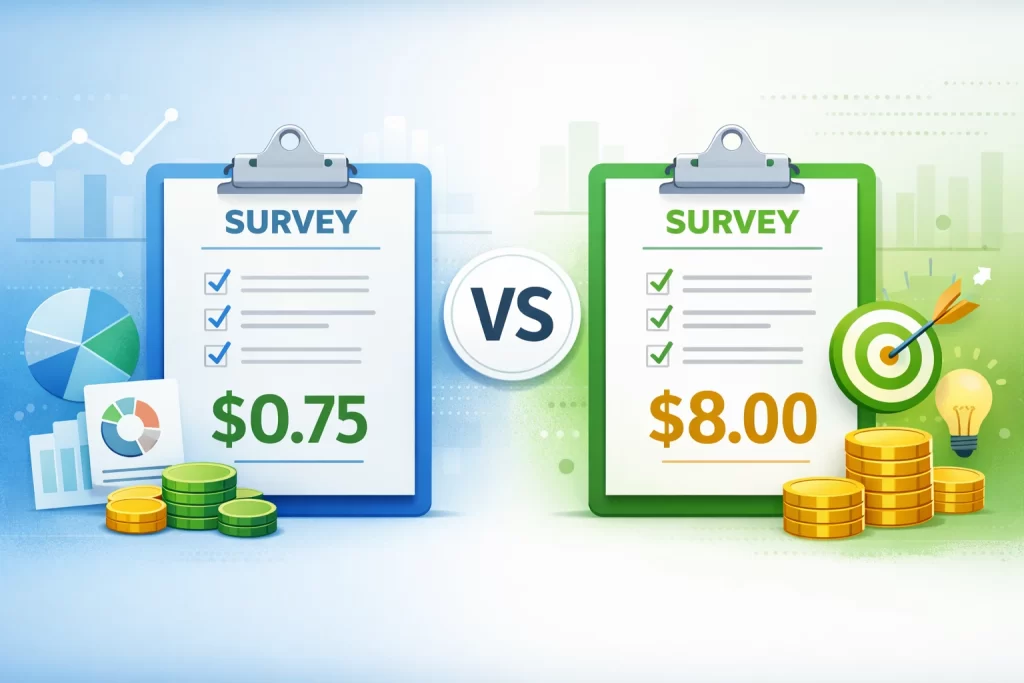
If you’ve ever taken a paid survey and thought, “Why was that one worth $8, but this one only $0.75?” — you’re not alone.
Paid survey sites don’t pick rewards randomly. Behind every survey payout is a business model built on data value, targeting, and speed. Once you understand how survey platforms actually make money, the differences in pay start to make sense — and you’ll also know which sites are worth your time.
Also See:
👉 Best Paid Survey Sites
👉 Are all survey sites legit?
How Paid Survey Sites Actually Make Money
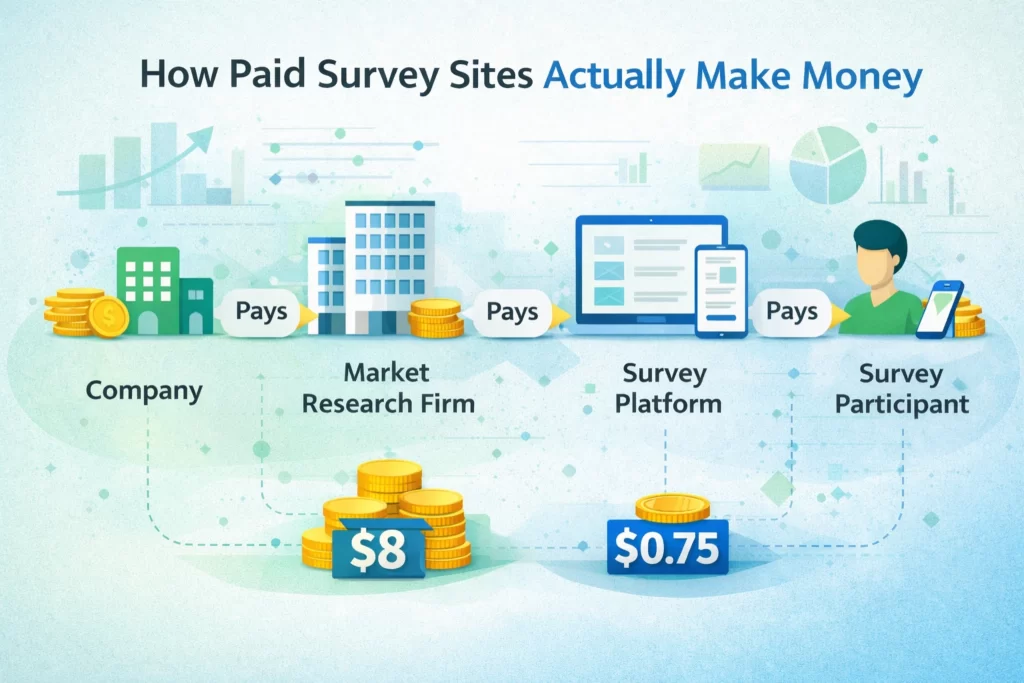
Paid survey sites act as middlemen between companies and consumers.
Here’s the basic flow:
- Companies need opinions, data, or feedback
- They pay a market research firm
- That firm distributes surveys through survey platforms
- Survey platforms pay users a portion of that revenue
The platform keeps a cut for hosting users, screening participants, preventing fraud, and managing payments.
Why Some Surveys Pay More Than Others
Not all opinions are worth the same — to businesses.
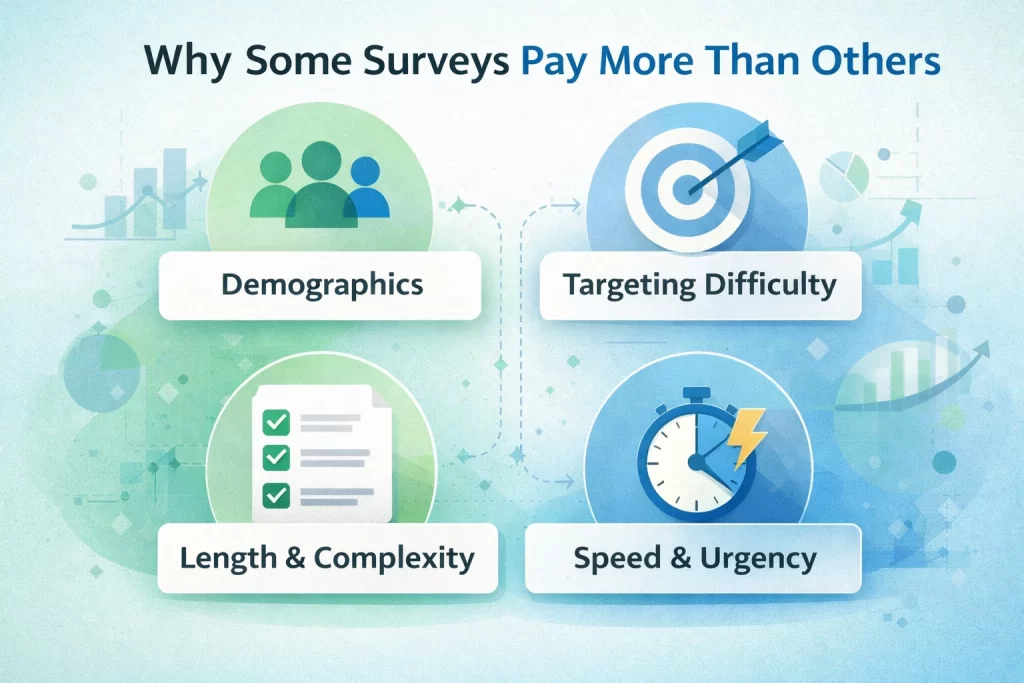
Survey payouts are based on four main factors.
1. Demographics (The Biggest Factor)
Age, location, income range, job role, and shopping behavior all affect survey value.
Example:
- General opinion survey → low pay
- Targeted professional or household survey → higher pay
Companies pay more when they need specific people, not just volume.
👉 How to Get Qualified For Paid Surveys
2. Targeting Difficulty
If a survey needs:
- A narrow age range
- A specific profession
- Recent purchase behavior
Fewer people qualify — so payouts increase.
High rejection rates usually mean higher rewards for users who qualify.
👉 How Paid Surveys Actually Work (Behind the Scenes)
3. Survey Length and Complexity
Short brand polls pay less.
Long, in-depth studies pay more.
Longer surveys often feed into:
- Product development
- Pricing research
- Advertising decisions
That data is valuable — and priced accordingly.
👉 Top Paid Survey Sites in 2026
4. Speed and Urgency
Some surveys need results fast.
Companies may be:
- Testing ads before launch
- Comparing competitors
- Making last-minute changes
Urgency increases value — and pay.
Why Survey Sites Have Payout Thresholds
Payout thresholds frustrate users, but they exist for practical reasons.
Survey platforms deal with:
- Payment processing fees
- Fraud prevention
- Account verification
Sending many small payments costs more than batching them.
Thresholds help platforms stay profitable while still offering competitive survey rewards.

Why Legit Survey Sites Can Feel Slow at First
Many new users assume survey sites are bad because earnings start slowly.
What’s actually happening:
- Your profile isn’t complete
- Platforms don’t know where you fit yet
- Reliability hasn’t been established
As you complete surveys consistently, better opportunities unlock.
How SurveyBeta Evaluates Survey Site Value
At SurveyBeta, we don’t judge platforms by headline payouts alone.
We evaluate:
- Survey availability
- Qualification rates
- Time vs reward
- Payout flexibility
- Overall user experience
That’s why some sites with fewer surveys still outperform high-volume platforms.
How Understanding This Helps You Earn More
When you understand how survey sites make money, you can work smarter:
- Complete profiles accurately
- Focus on quality platforms
- Avoid burnout from low-value offers
Survey platforms reward reliable, targeted users — not rushed clicks.
Final Thoughts
Paid survey sites aren’t underpaying users on purpose. They respond to how much companies are willing to pay for specific data.
Once you understand the business model, you can choose better platforms, save time, and get more value from every survey session.
Survey Payouts FAQ: Why Rates Vary and How to Find Top Offers
Survey payouts depend on demographics, targeting difficulty, survey length, and urgency. Companies pay more for specific users or fast results.
Survey platforms earn money by connecting users with market research firms and keeping a portion of what companies pay for consumer data.
Thresholds reduce transaction costs, prevent fraud, and help platforms offer higher-value surveys.
Not always. Some take longer or have stricter qualifications. The best surveys balance time, effort, and reward.
Yes. Knowing how survey sites work helps you qualify more often and avoid low-value opportunities.
Related Pages
- Best Passive Income Apps
- Get Paid To: Apps, Games & Data
- Best Survey Sites
- Paid Surveys Guide
- Tools Page

With 15+ years in market research and online earnings, Alex helps everyday users find real, reliable ways to make money online. He reviews survey sites, passive income apps, and AI-powered earning tools to steer readers toward safe, trustworthy platforms.