
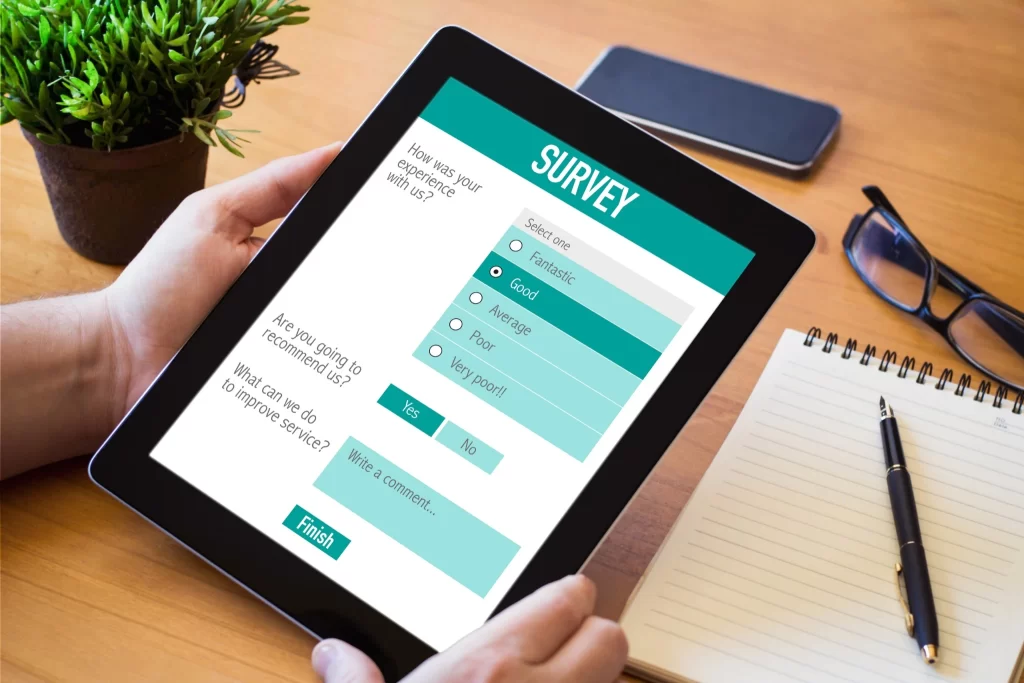
Paid surveys can seem confusing at first.
Some surveys pay well.
Some disqualify you.
Some appear at random, while others seem to never show up at all.
This page breaks down how paid surveys actually work from the market research side — not the marketing side. Understanding the real mechanics makes it easier to:
- Avoid frustration
- Choose better survey sites
- Maximize earnings
- Trust the process
No hype. No gimmicks. Just how the system works.
The Big Picture: Why Paid Surveys Exist

Paid surveys are part of the broader market research industry. Companies use consumer data to:
- Test products
- Improve services
- Understand customer behavior
- Measure brand perception
Instead of guessing, brands pay for real opinions from real people.
Survey platforms act as intermediaries. They connect:
Brands & research firms → everyday consumers
That’s why paid surveys exist. Your opinions and data have measurable value. They also are created so the survey companies themselves can make their money. See: How Paid Survey Sites Make Their Money?
Who Is Involved in the Survey Ecosystem?
There are several moving parts between you and the client that creates the survey.
1️⃣ Brands & Research Firms
These are the companies that need data. They decide:
- What information to collect
- Who they want feedback from
- How much they’re willing to pay
They rarely contact consumers directly. Instead, they outsource that work instead.
2️⃣ Survey Panels (Survey Sites)
Survey platforms — also called panels — recruit users and distribute surveys. They:
- Build and maintain user profiles
- Match users with relevant surveys
- Handle points, cash-outs, and rewards
Every panel works with different partners, which is why no single site has every survey.
3️⃣ Aggregators & Offer Walls
Some platforms do not produce their own surveys. Instead, they:
- Pull surveys from multiple networks
- Display them in one interface
- Take a smaller cut from completions
Aggregators usually increase survey volume. However, they can also increase disqualifications because filtering is less precise.
4️⃣ You (The Participant)
Your role is to provide:
- Demographic data
- Behavioral data
- Opinions and insights
You get paid because your participation replaces more expensive in-person research.
Why You Get Disqualified From Surveys

Disqualifications are the biggest frustration in paid surveys, but they are not random. Common reasons include:
- Your profile doesn’t match the target group
- Quotas filled before you finished
- Your answers conflict with your profile
- You already completed a similar survey
Brands don’t want “everyone.” They want specific audiences.
Because of that, completing your profile accurately matters a lot.
Why Some Surveys Pay More Than Others
Survey payouts are based on their business value, not just time spent.
Higher-paying surveys typically involve:
- Specific demographics
- Purchase behavior
- Professional insights
- Financial or health topics
- Long-term studies or product tests
Lower-paying surveys often include:
- Quick opinion polls
- Brand sentiment checks
- Initial screening surveys
This is normal across the industry. It does not mean a site is cheap or unfair.
Why Joining Multiple Survey Sites Matters
No single panel:
- Has every survey
- Works with every research firm
- Fits every user profile
Joining multiple reputable survey sites:
- Increases total survey availability
- Reduces periods with no surveys
- Creates more stable monthly earnings
This is why SurveyBeta recommends selective multi-panel participation, not loyalty to just one platform.
How Rewards and Payments Actually Work
Survey sites receive payment from research firms after data collection is complete.
From that payment:
- The panel takes its cut
- The remaining value becomes user rewards
This explains why:
- Some platforms have payout thresholds
- Cash-outs may take time
- Bonuses exist to keep users active
Reputable platforms do pay — just not instantly like food delivery or gig apps.
Paid Surveys vs Passive Data Collection
Surveys aren’t the only way brands collect data. There are two major categories:
Active Data (Surveys)
- You answer questions manually
- Higher involvement
- Higher pay per activity
Passive Data (Apps & Panels)
- Data is collected automatically
- Lower effort
- Lower but steadier earnings
Many users combine both for better consistency.
Why SurveyBeta Reviews Focus on Transparency
SurveyBeta reviews don’t just ask “Does this site pay?” They also evaluate:
- Who operates the platform
- What type of data is collected
- How reliable payouts are
- Time vs reward ratio
- User experience and safety
If a platform fails these criteria, we simply don’t recommend it.
Common Myths About Paid Surveys
❌ “Paid surveys are scams”
The legitimate survey industry is real. Scams exist, but they are easy to avoid once you understand how the ecosystem works.
❌ “You can get rich from surveys”
Surveys are for supplemental income, not full-time replacement.
❌ “Disqualifications mean the site is cheating you”
Most screenouts happen because you aren’t in the target audience — not because the site is rigged.
How to Get Better Results From Paid Surveys
Understanding the mechanics lets you work smarter.
Practical strategies:
- Complete profiles accurately
- Join multiple high-quality panels
- Use survey sites consistently
- Don’t rush through questions
- Pair surveys with passive data apps
Small adjustments can dramatically improve earnings and reduce frustration.
Where to Go Next
If you’re ready to explore further:
- Browse the Best Paid Survey Sites
- Read individual SurveyBeta Reviews
- Learn how to mix surveys with Passive Income Apps
- Use SurveyBeta tools to estimate earnings
Once you understand the system, everything else makes more sense.
How Surveys Work FAQ: Behind the Scenes & Industry Secrets
Paid surveys connect brands and research firms to everyday consumers through survey panels and aggregators. Companies need feedback for product development, advertising, and consumer insights. Panels recruit users, handle screening, distribute surveys, and process payouts. You get paid because your data has value in the research process.
Brands pay because consumer data helps them make informed decisions. Surveys reveal what people like, dislike, buy, watch, and care about. This reduces risk for product launches, advertising campaigns, and customer experience improvements.
Screen-outs happen when you don’t match the target demographic, quotas are full, or answers don’t meet study criteria. Quality control also matters. Screen-outs are normal in the research world.
Pay varies based on survey length, topic, and target audience. Specialized studies pay more than short consumer surveys.
Yes, but surveys are supplemental income. Earnings depend on time, demographics, region, and number of panels.
You may earn cash, gift cards, points, or sweepstakes entries. Most platforms have minimum cash-out thresholds and processing times.
Active surveys require manual answers. Passive data apps collect data in the background. Many users combine both.
Join multiple panels, complete profiles, cash out promptly, use mobile apps, try passive data apps, and focus on reputable platforms.
The One Thing to Remember
Paid surveys aren’t random.
They are structured.
And once you understand that structure, the experience becomes far less frustrating.

With 15+ years in market research and online earnings, Alex helps everyday users find real, reliable ways to make money online. He reviews survey sites, passive income apps, and AI-powered earning tools to steer readers toward safe, trustworthy platforms.